

What Is a Vault?
A Hyperliquid vault is a pooled trading account on the Hyperliquid Perpetual Exchange. One person — the leader — controls the trading decisions. Everyone else — depositors — contribute capital and share the results, good or bad.
The structure is straightforward: the leader trades, depositors fund, and both parties split the returns according to a preset commission. Leaders earn a cut of profits for their execution; depositors get exposure to a strategy without managing positions themselves.
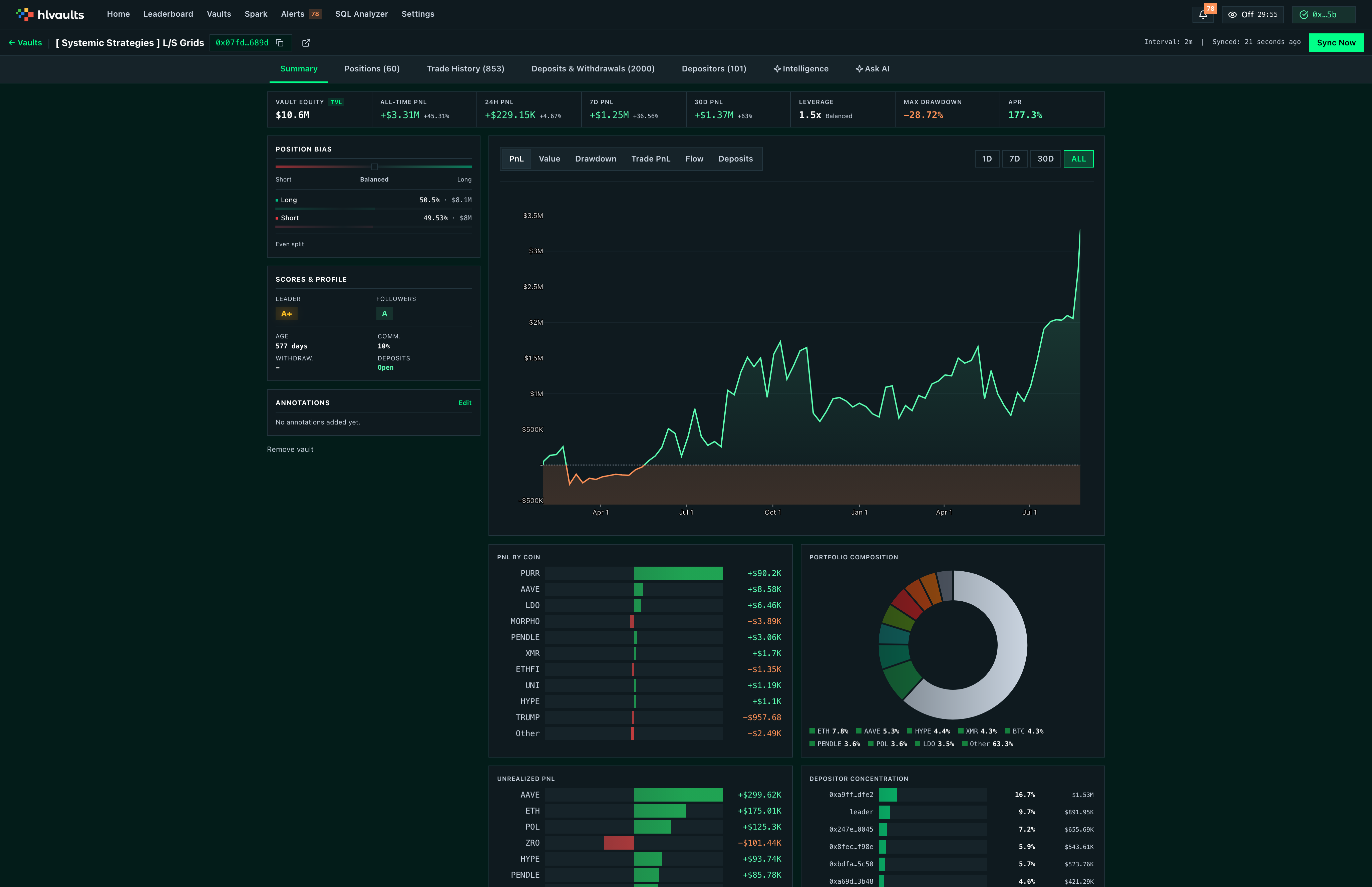
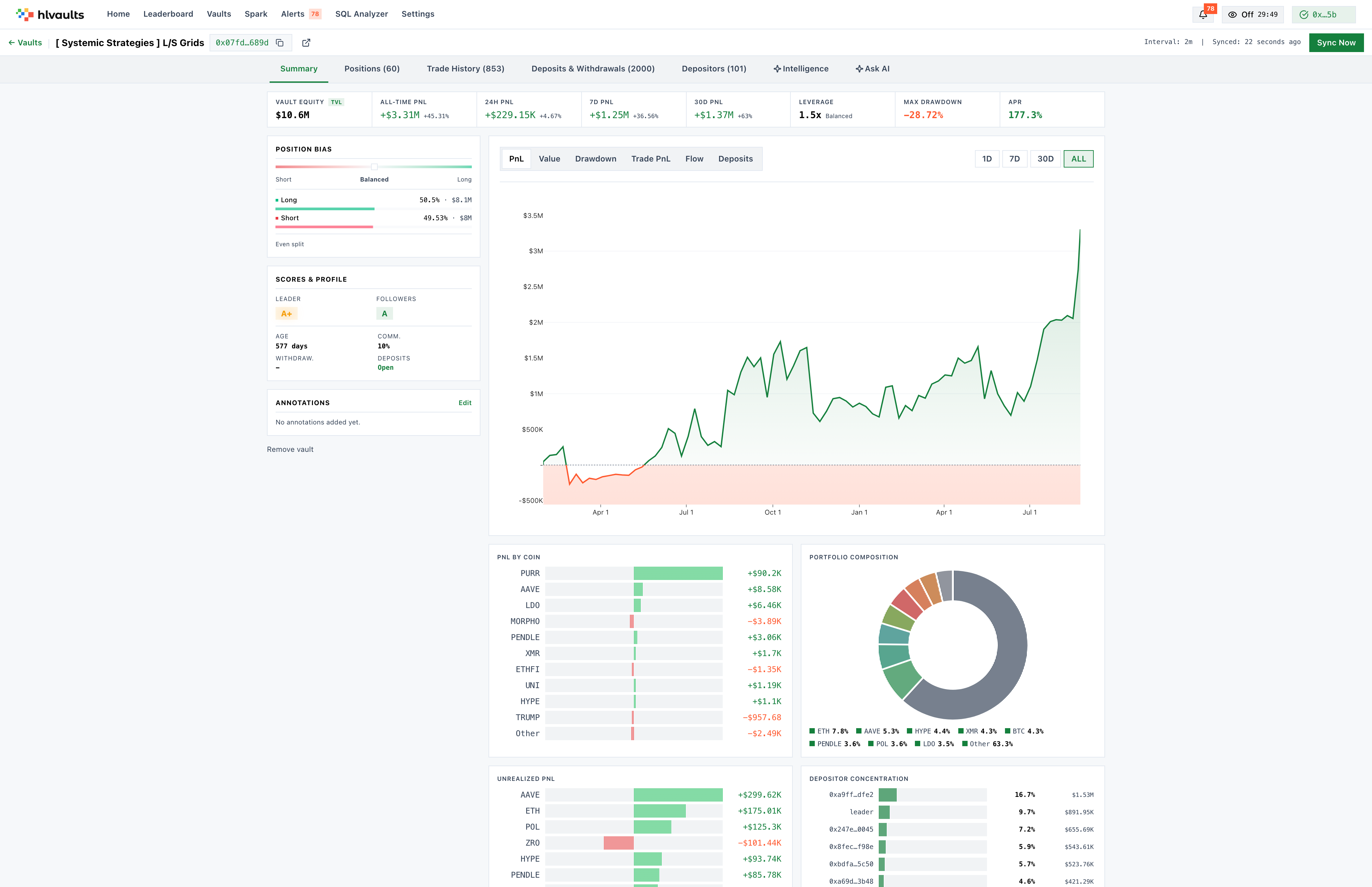
Who runs a vault?
Section titled “Who runs a vault?”The leader is the wallet that created the vault. They hold full trading authority over its capital. Specifically, they:
- Open and close positions using the vault’s pooled funds
- Set the commission rate they take from profits
- Lock deposits during active trading when needed
- May invest their own capital alongside depositors
A leader’s effectiveness is measured by their Leader Performance (LP) grade — an annualized score based on their personal PnL. This grade gives depositors a standardized way to evaluate who they’re trusting with their capital.
Who funds a vault?
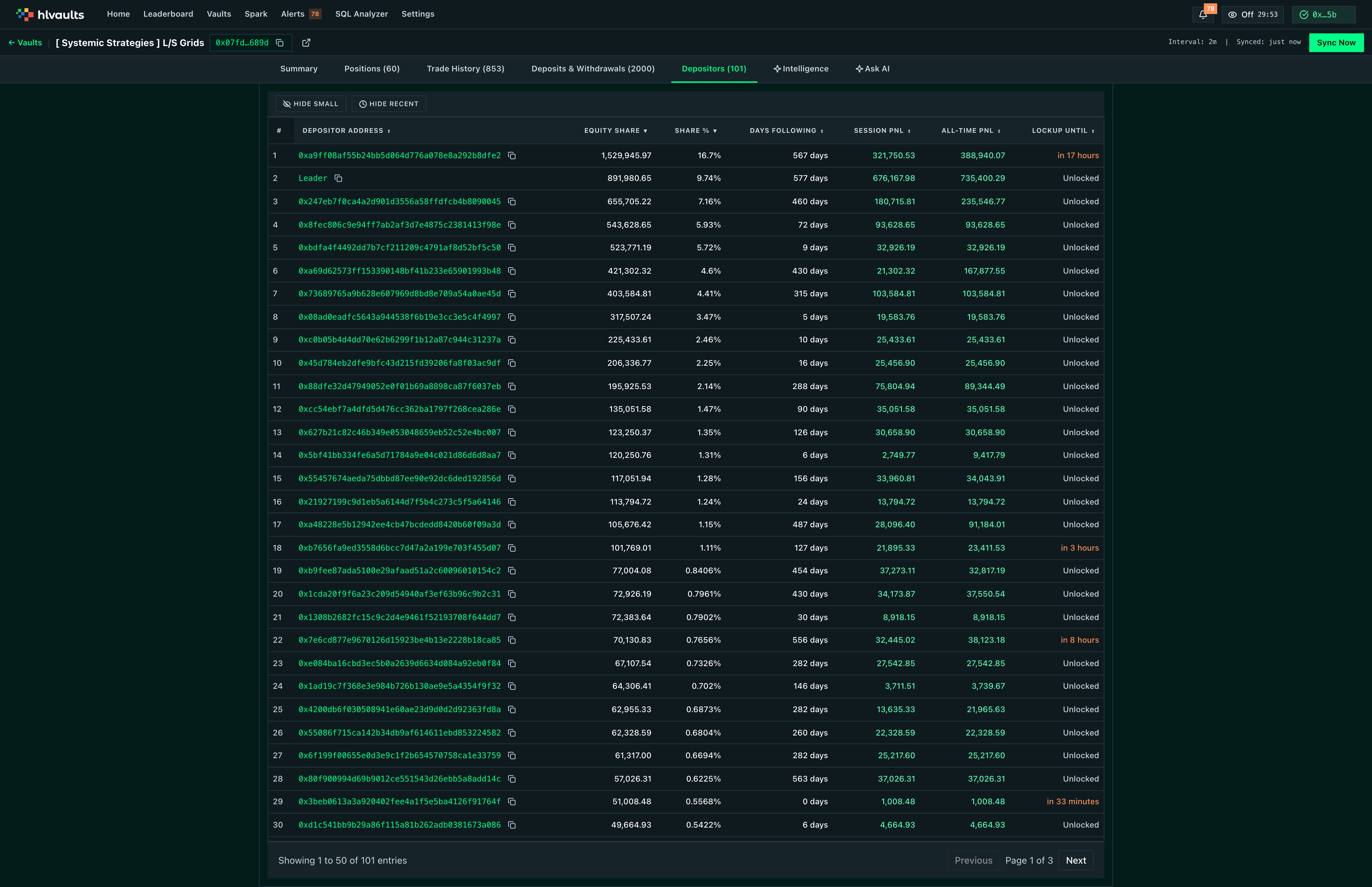
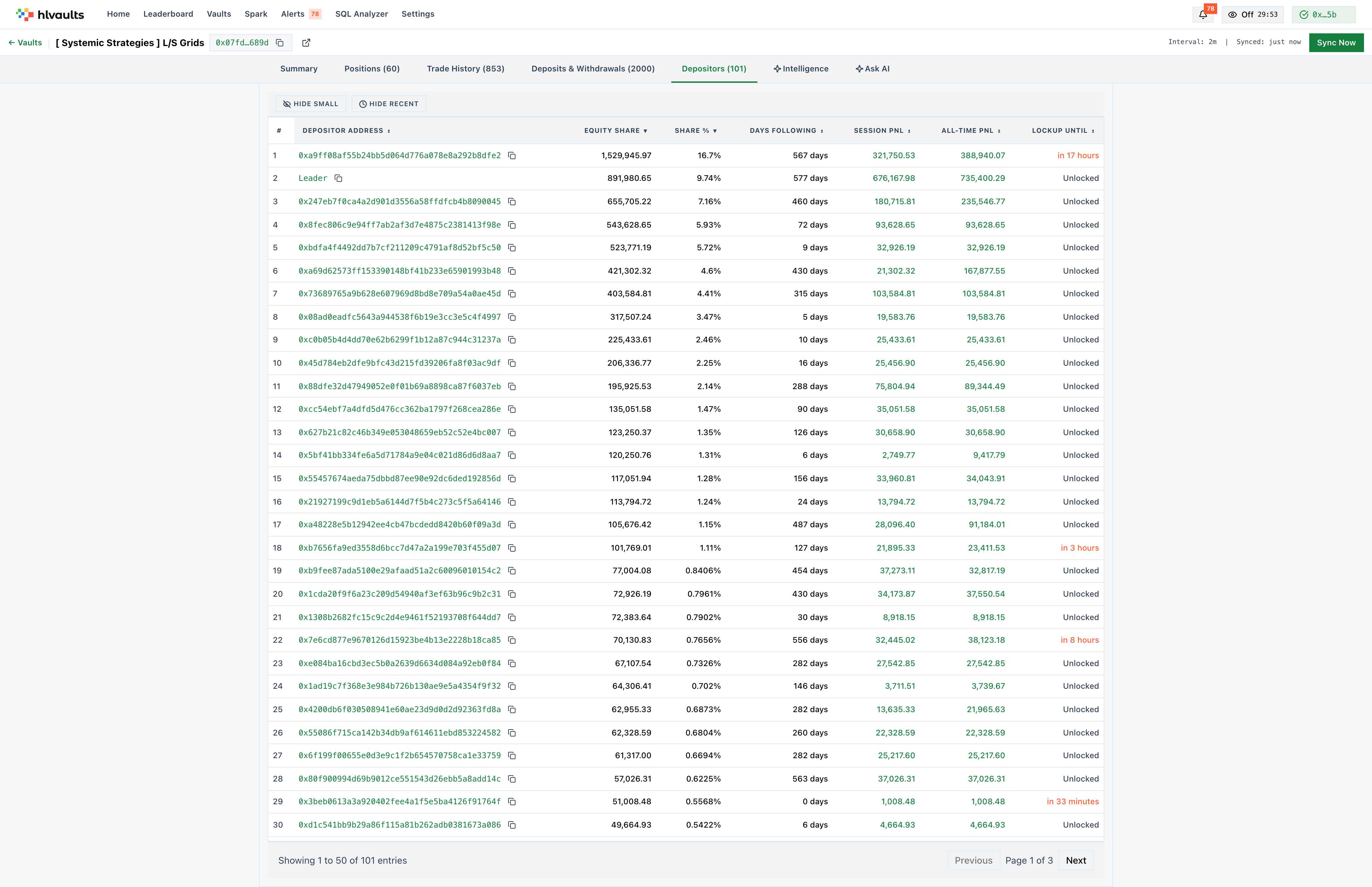
Section titled “Who funds a vault?”Depositors are wallets that send capital into the vault. Each depositor:
- Owns a proportional share of the vault’s equity
- Earns or loses based on the vault’s net performance (gross returns minus the leader’s commission)
- Can withdraw subject to the vault’s lockup rules
- Has their individual PnL tracked separately
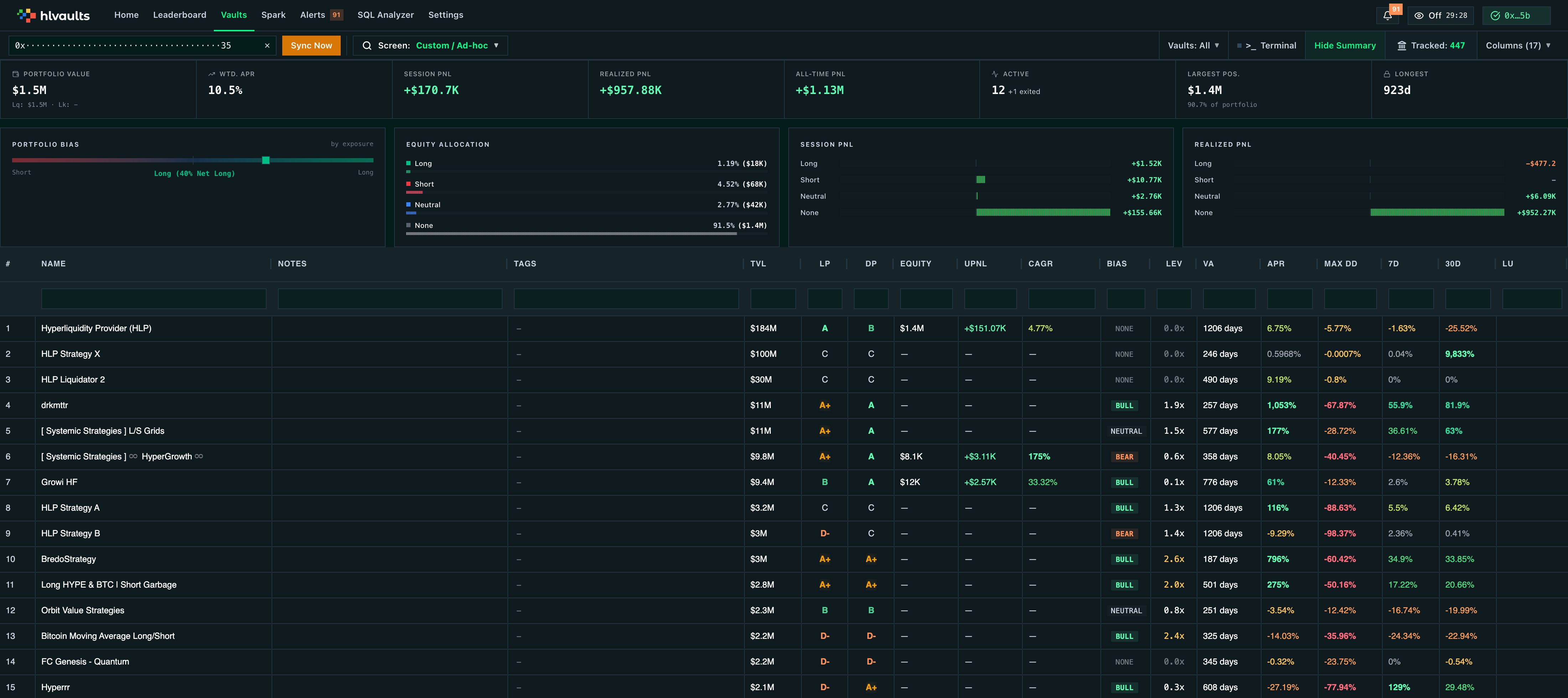
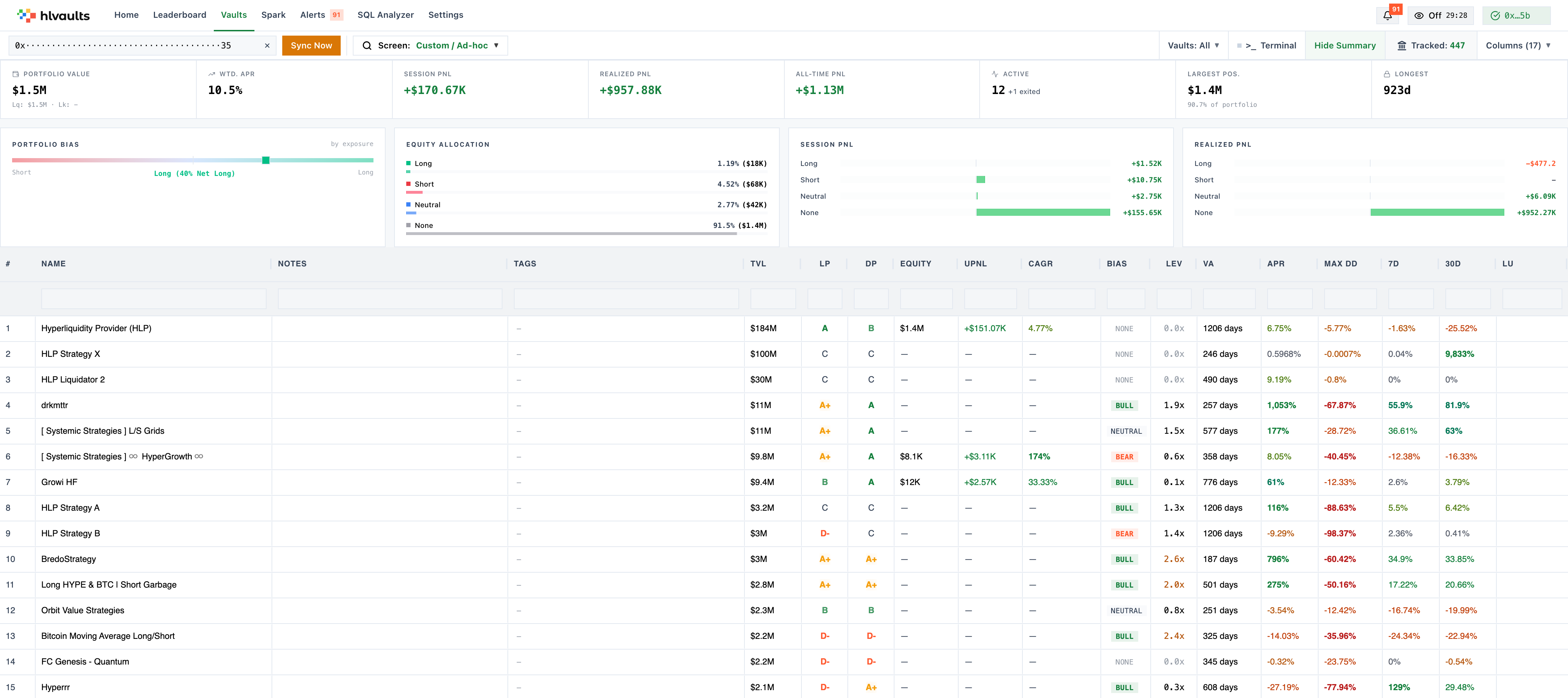
Enter your wallet addresses in the app and the vault grid highlights your positions — showing your equity, PnL, and lockup status at a glance.
How do commissions work?
Section titled “How do commissions work?”Leaders charge a commission on profits. You’ll see this as the Leader Commission (LC) column. A 10% commission means the leader keeps 10% of all profits before distributing the remainder to depositors.
Rates vary widely — typically between 5% and 20%. Higher commissions are not inherently bad. A leader who consistently generates strong risk-adjusted returns may justify a higher cut. The key question is whether the net return to depositors, after fees, aligns with your targets.
Related: For a detailed breakdown of fee types, high-water marks, and how fees interact with vault grades, see Fees & Commissions.
What are lockup periods?
Section titled “What are lockup periods?”Some vaults require you to stay invested for a minimum period after depositing. This is the lockup period — during which you cannot withdraw.
Lockups exist to give leaders stable capital for executing medium-term strategies. Without them, a leader might be forced to close positions prematurely during a mass withdrawal.
The Locked Until (LU) column shows when your capital becomes withdrawable. Once unlocked, you can withdraw at any time, subject to the vault’s available liquidity.
What states can a vault be in?
Section titled “What states can a vault be in?”| Phase | Meaning |
|---|---|
| Active | The vault is trading and currently accepting deposits (if open) |
| Inactive | The vault is no longer trading — no new positions, no deposits |
| Open for deposits | The vault has Allow Deposits = Yes; you can add capital |
Use the vault type filter in the toolbar to toggle between active and inactive vaults.
Why invest in a vault?
Section titled “Why invest in a vault?”Vaults solve a specific problem: not everyone wants to trade actively, but many want access to Hyperliquid’s markets.
Investing in a vault lets you:
- Delegate trading to people who do it full-time, without having to manage positions yourself
- Diversify across multiple strategies, bias profiles, and risk levels
- Access Hyperliquid without needing to be an active trader
- Evaluate performance objectively using standardized metrics applied consistently across all vaults
The challenge is finding vaults whose strategy, risk profile, and return characteristics match your own investment goals. That’s the purpose of this documentation — to give you the framework and the data to make that judgment.
Limitations to consider
Section titled “Limitations to consider”Vaults come with trade-offs worth acknowledging:
- No control over execution. Once you deposit, the leader makes all trading decisions. You cannot override a position or demand a specific strategy.
- Lockup risk. Your capital may be inaccessible for days or weeks after depositing.
- Leader risk. A leader can change their strategy, increase commissions, or stop trading entirely. Past performance does not guarantee future results.
- No insurance. Unlike traditional brokerage accounts, there is no SIPC-style protection. Losses are real and final.
- Concentration risk. Vaults typically trade in a single direction or style. A vault that performs well in a bull market may collapse in a bear market.
Understanding these risks is essential before committing capital.
Related
Section titled “Related”- Column Reference — every metric explained
- Performance Metrics — how grades and scores are calculated
- Vault Evaluation Strategy — a systematic approach to selecting vaults
- Fees & Commissions — how commissions affect your net returns
- Getting Started — start using the app